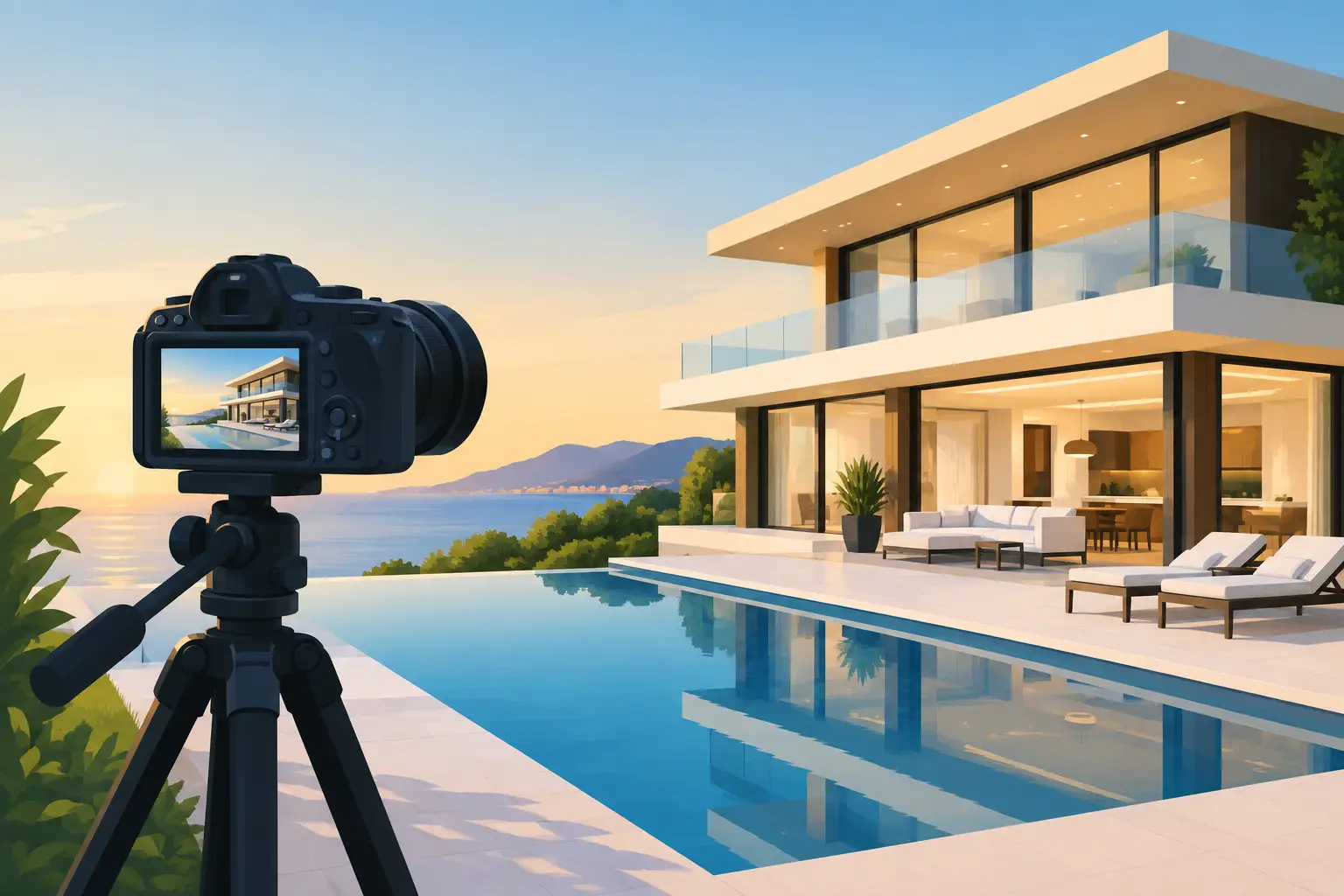
A luxury listing can have a chef’s kitchen, panoramic water views, imported stone, and a carefully designed outdoor living area, yet still feel ordinary online if the visuals do not communicate its character. Real estate photography for luxury homes is not simply about making rooms look bright. It is about helping buyers understand the property’s scale, craftsmanship, privacy, and lifestyle before they book a showing.
For agents marketing high-value homes in Surrey, Langley, White Rock, Vancouver, Delta, and across the Lower Mainland, presentation has a direct effect on the quality of inquiry a listing receives. The right media creates interest without misrepresenting the home. That balance is where thoughtful planning and experienced execution matter.
Why Luxury Properties Need a Different Visual Strategy
Every property deserves professional media, but luxury homes ask more of the visual team. They often have larger floor plans, layered architecture, premium finishes, landscaped grounds, and views that change throughout the day. A standard set of wide interior photos may document the rooms, but it may not explain why the home is worth its position in the market.
Buyers at this level are often comparing multiple properties online before they contact an agent. They are looking for signals of quality: clean lines, natural light, material detail, generous proportions, and a sense of how the home functions. The media should make those details easy to see without turning the listing into a catalog of close-ups.
There is also a practical consideration. Luxury properties can be highly personal spaces. Art collections, family photographs, custom furniture, and security-sensitive features require more careful preparation and framing. The goal is to show the home at its strongest while respecting the owner’s privacy and the agent’s marketing plan.
Real Estate Photography for Luxury Homes Starts Before the Camera
The most polished results are usually decided before the first image is captured. A pre-shoot conversation helps us identify the home’s strongest selling points and determine where visual attention should go. For one property, that may be an indoor-outdoor entertaining area. For another, it could be a private primary suite, a detached guest house, a golf-course backdrop, or exceptional architectural detailing.
Prepare the home for editorial-quality images
Luxury photography benefits from a more deliberate level of preparation than many sellers expect. Counters should be cleared of daily items, but not stripped to the point that the house loses warmth. Beds should be crisp, towels coordinated, and outdoor furniture arranged with purpose. Fresh landscaping, pool maintenance, and clean windows can have an outsized impact, especially when the home’s appeal depends on views and exterior spaces.
Small distractions become more visible in high-resolution photography. Cords, remote controls, cleaning bottles, pet items, and mismatched accessories can pull attention away from expensive finishes. Agents can guide sellers through a simple preparation plan, then let the media team assess any final adjustments on site.
Schedule around the property, not just the calendar
Timing affects luxury listings more than many people realize. A west-facing view may be strongest later in the day, while a bright great room may photograph best before direct sunlight creates harsh patches across the floor. Homes with extensive glazing, mature trees, or waterfront exposure benefit from a schedule built around their specific light conditions.
Twilight photography can add a compelling second look for the right property, particularly when architectural lighting, pools, fire features, city views, or landscaped grounds are part of the story. It is not necessary for every listing, and it should not be used as a substitute for strong daytime coverage. When it fits, however, twilight imagery can give agents a distinctive hero image for marketing materials and social media.
What High-End Property Images Should Communicate
Luxury photography should do more than make each room appear large. Wide compositions are useful for establishing layout and scale, but a home can start to feel distorted if every image relies on an ultra-wide perspective. Buyers need an accurate sense of the space they will walk into.
We approach a luxury property as a sequence of visual decisions. Establishing images show the arrival, facade, main living spaces, and relationship between rooms. Medium views reveal function and flow. Detail images can then highlight millwork, stone, lighting, fixtures, and design moments that distinguish the home from another listing with a similar square footage.
Natural-looking HDR photography is especially valuable when a room includes bright windows and darker interior surfaces. The objective is to retain exterior views, balanced shadows, and true-to-life color without creating an overly processed result. If the sky is visible from the living room, it should feel believable. If the walnut cabinetry has a warm tone, it should not turn orange under heavy editing.
Color accuracy is not a minor technical detail. In a luxury home, paint selections, flooring, countertops, and textiles are part of the buyer’s impression of quality. Consistent editing helps the complete gallery feel refined and trustworthy from the first image to the last.
Video, Drone, and Floor Plans Build the Full Story
Still photography remains the foundation of a listing, but some luxury properties need more than a photo gallery to communicate their value. The right supporting media can answer questions that images alone cannot.
A cinematic property video is useful when the home has a strong sense of progression: an impressive entrance, a view that unfolds as you move through the space, or a connection between interior rooms and outdoor amenities. Video should feel intentional, not rushed. Smooth movement, measured pacing, and selective shots help viewers experience the property rather than simply scan it.
Drone photography and video can be equally valuable for acreage, waterfront homes, corner lots, estates, properties near parks or golf courses, and homes with meaningful proximity to urban amenities. Aerial media provides context, but it should be used responsibly. Not every location permits drone operation, and a high drone shot without a clear purpose can add visual noise rather than value.
Floor plans give buyers a practical way to understand room placement and overall layout. This is especially helpful in large homes with multiple levels, suites, recreation spaces, or flexible rooms. For out-of-town and international buyers, a clear floor plan can make a listing easier to evaluate before arranging a visit.
A custom property website or a focused social media reel may also be appropriate when an agent is running a broader campaign. The decision depends on the target buyer, the listing timeline, and where the property is being promoted. More media is not automatically better. The strongest package is the one that presents the home consistently across every touchpoint.
Common Mistakes That Reduce Perceived Value
The most frequent problem in luxury listing media is inconsistency. A few polished photos followed by dim rooms, poor vertical lines, or heavily filtered edits can make the overall presentation feel less considered. Buyers may not describe the issue technically, but they notice when a listing feels uneven.
Another mistake is showing every room with equal emphasis. A utility room, secondary bedroom, or small storage area may need documentation, but it does not need the same visual weight as a dramatic kitchen, spa-like bathroom, or view-facing living space. Strong editing and image selection create a gallery with rhythm.
Overstaging can also work against a property. Luxury buyers want to imagine their own life in the home. Excessive decor, artificial-looking fire effects, or styling that conflicts with the architecture can make images feel less credible. The best visual presentation supports the home’s design rather than competing with it.
Finally, avoid treating the media appointment as a standalone task. Photography, video, drone coverage, floor plans, and social assets should work from one visual direction. When each asset tells a slightly different story, the marketing loses cohesion.
A Local Approach Makes the Difference
The Lower Mainland has an unusually varied luxury market. A contemporary waterfront property in White Rock requires a different visual emphasis than an acreage estate in Langley, a custom build in South Surrey, or a view home in Vancouver. Weather, light, lot orientation, neighborhood character, and buyer expectations all shape the plan.
At KS MAGIK SHOT, we tailor the media approach to the property rather than applying the same checklist to every listing. That means considering what will catch attention in the first few seconds online, what needs to be explained visually, and which features deserve room to breathe.
When a luxury home is prepared with care and photographed with a clear strategy, the visuals do more than create attention. They help the right buyers arrive at a showing with a stronger understanding of what makes the property worth seeing in person.
Leave a Reply