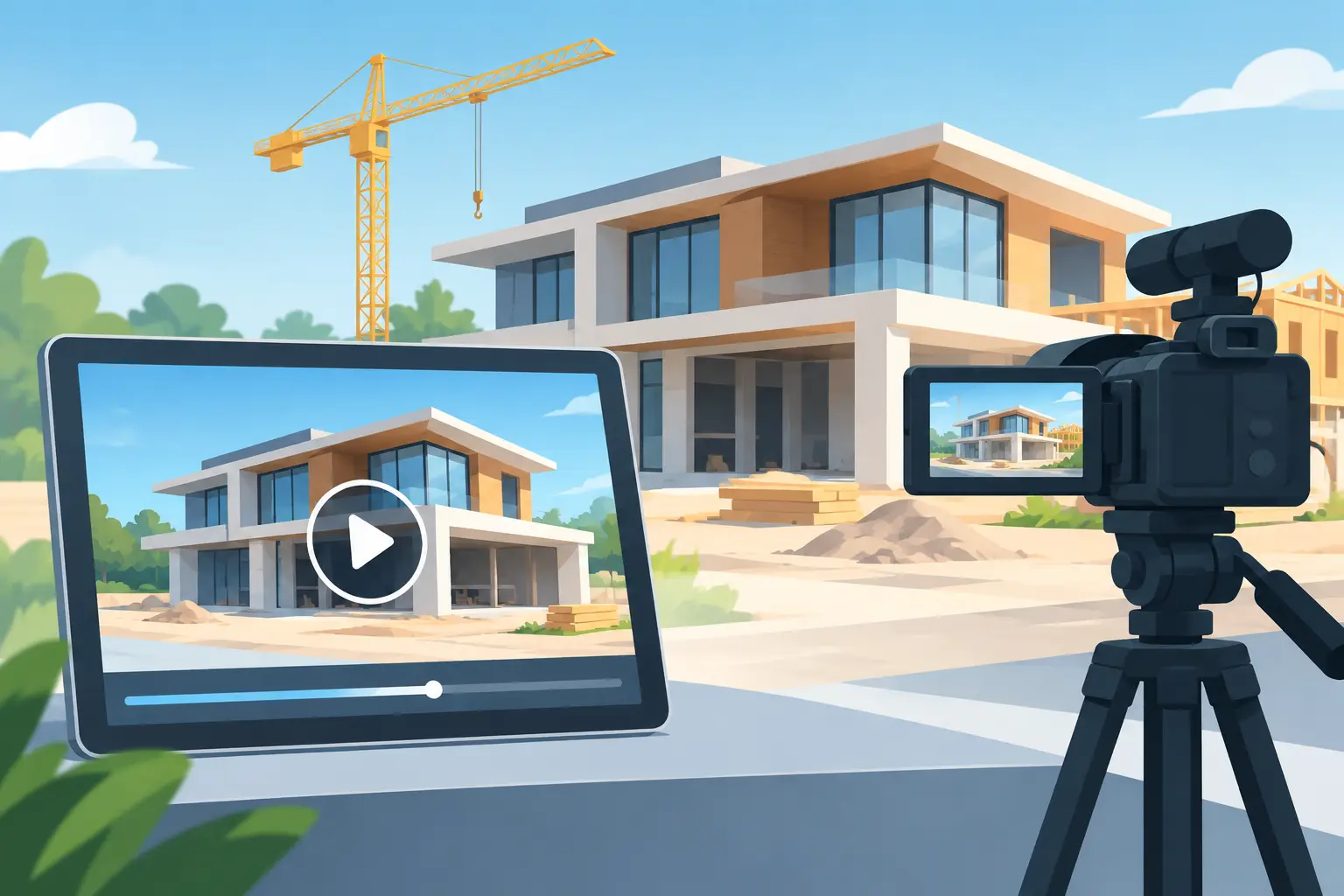
A buyer standing in an unfinished condo, a framed spec home, or a newly completed development is not just evaluating square footage. They are trying to picture a morning in the kitchen, the view from a balcony, the route to nearby amenities, and the quality behind every finish. A new construction real estate video gives that vision structure, turning plans, materials, and empty rooms into a story buyers can understand quickly.
For builders, developers, and realtors across Surrey, Langley, Delta, White Rock, Vancouver, and the Lower Mainland, video has a different role in a new-build campaign than it does for a resale listing. It must create confidence in what is being delivered while presenting the lifestyle that comes with it. The strongest videos feel polished and aspirational, but they also remain accurate to the actual property, stage of construction, and intended buyer.
Why a New Construction Real Estate Video Carries More Weight
With a resale home, buyers can usually see how someone has lived in the space. Furniture, landscaping, and personal details provide instant context. New construction often starts with a blank canvas. Even a fully finished unit may feel less familiar without the lived-in cues that help buyers understand scale and flow.
Video fills that gap by guiding the viewer through the property in a deliberate sequence. A wide exterior establishes arrival. A smooth transition through the entry shows how the floor plan opens up. Close-up details of cabinetry, tile, lighting, and hardware communicate the level of finish. Exterior footage can connect the home to its street, neighborhood, transit access, green space, or nearby retail.
That visual context matters because new-build decisions are frequently made before a buyer has spent much time onsite. A well-planned video helps make the property feel tangible, whether the project is a single custom home, a collection of townhomes, a presale condominium development, or a newly completed investment property.
It Sells the Experience, Not Just the Features
A feature list can state that a home has nine-foot ceilings, engineered flooring, an oversized island, and a rooftop patio. Video shows how those features work together. It can reveal the natural light in the main living area, the connection between an indoor kitchen and outdoor entertaining space, or the privacy offered by a primary bedroom suite.
The distinction is important. Buyers do not always respond to specifications on their own. They respond to the feeling those specifications create. The goal is not to make every room look dramatic. It is to present proportion, light, quality, and movement honestly enough that the buyer can imagine living there.
Start With Buyer Questions, Not a Shot List
The best production begins before the camera arrives. A generic walkthrough may capture rooms, but it can miss the details that differentiate one new project from another. We start by identifying who the property is designed for and what they need to understand first.
For a family-oriented home in South Surrey or Langley, the story may emphasize bedroom separation, a functional mudroom, a fenced yard, nearby schools, and flexible living areas. For an urban Vancouver condo, the video may place more weight on views, building amenities, efficient design, walkability, and transit. A luxury custom build in White Rock may require more time on architectural lines, premium materials, indoor-outdoor living, and the relationship to the surrounding landscape.
This does not mean every selling point needs to appear as text on screen. In many cases, thoughtful visuals do more work than a crowded list of labels. On-screen graphics can be useful for key facts such as unit type, bedroom count, or completion timing, but they should support the imagery rather than compete with it.
Map the Video Around a Natural Journey
Most effective new construction videos follow the path a buyer would take during a showing. They begin with the setting, move through arrival and primary living spaces, then transition to private areas and outdoor features. This sequence gives the audience a clear understanding of the layout without feeling like a room-by-room inventory.
The edit should also give the strongest spaces enough time to register. A showcase kitchen, a double-height living room, a panoramic view, or a finished basement suite deserves more than a quick pass. At the same time, slower pacing is not always better. The right rhythm depends on where the video will be used and how the target buyer consumes content.
What Footage Should a New-Build Video Include?
The property itself should remain the focus, but a complete video often combines several types of footage. Exterior establishing shots help buyers understand curb appeal, site orientation, and the character of the street. Interior footage presents the flow of the home and highlights material choices. Detail shots bring attention to craftsmanship, from millwork and faucets to fireplace surrounds and appliance integration.
Drone footage can add meaningful perspective when it reveals something buyers cannot easily see from the ground. It is particularly valuable for acreage properties, waterfront locations, corner lots, large developments, rooftop spaces, or homes near parks and community amenities. It should have a clear purpose, though. Aerial footage that does not add location or scale can make a video feel longer without making it more useful.
Neighborhood footage can be equally effective when it is specific to the buyer’s priorities. A nearby beach, trails, village center, skyline, or commuter route may help frame the lifestyle around the project. For presale marketing, these scenes can be especially useful when construction is not yet complete.
At KS MAGIK SHOT, we tailor the visual plan to the property and campaign rather than applying the same formula to every build. That approach helps ensure the finished video reflects the architecture, target audience, and stage of the project.
Production Choices That Affect Credibility
New construction media has to look refined, but it should never create false expectations. Accurate color, balanced window exposure, and carefully composed angles make a major difference in how finishes and room dimensions are perceived. These are not minor technical details. They influence whether a property feels professionally presented or visually inconsistent.
Lighting requires particular attention. Natural light can make a space feel open and inviting, but direct sun can also create harsh contrast and hide detail. Twilight exterior footage can give a completed property warmth and presence, especially when architectural lighting and landscaping are part of the design. It is not necessary for every listing, but it can be worthwhile for higher-end homes or projects where the exterior is a major selling feature.
Sound and music deserve similar restraint. Music should establish a contemporary, confident tone without overpowering the visuals. Voiceover can work well for a development story, a builder profile, or a project with many details that need explanation. For an individual home, clean visuals with concise on-screen information may be more effective. The choice depends on the distribution plan and the attention span of the intended viewer.
Horizontal, Vertical, or Both?
A polished horizontal video remains valuable for property websites, YouTube, presentations, email campaigns, and listing marketing. Vertical short-form edits are often better suited to social media feeds and stories, where buyers may first encounter the property on a phone.
These formats should not simply be cropped versions of the same file. Vertical video needs intentional framing so key architectural features, views, and room proportions still read clearly on a smaller screen. When both are planned from the start, the content can work harder across multiple channels without sacrificing quality.
Match the Video to the Stage of Construction
A new construction real estate video can be useful well before final completion, but the message must be clear about what the viewer is seeing. Early-stage content may focus on the site, neighborhood, architectural renderings, model units, and builder vision. It is a useful way to build interest, though it should distinguish between completed features and planned elements.
During construction, progress videos can provide useful updates for investors, future owners, and project stakeholders. They also create a record of the build process and can support future marketing when paired with completed footage. These videos usually benefit from a more documentary approach, showing momentum and key milestones without overpromising unfinished areas.
Once the project is complete, the focus shifts to the finished experience. This is the time for cinematic interior movement, detailed finish shots, twilight scenes, drone views where appropriate, and polished edits that support active sales. For multi-unit developments, a combination of hero footage, representative unit tours, amenities, and local lifestyle scenes can serve both broad campaigns and individual listings.
A Better Standard for Project Marketing
Professional video is not about adding movement for its own sake. It is about reducing uncertainty. It helps buyers understand what is being built, why the layout works, how the finishes come together, and what the surrounding location adds to daily life.
When a new-build video is planned with care, it becomes more than a listing asset. It gives every conversation about the property a clearer starting point, helping the right buyer see the value before they ever step through the door.
Leave a Reply