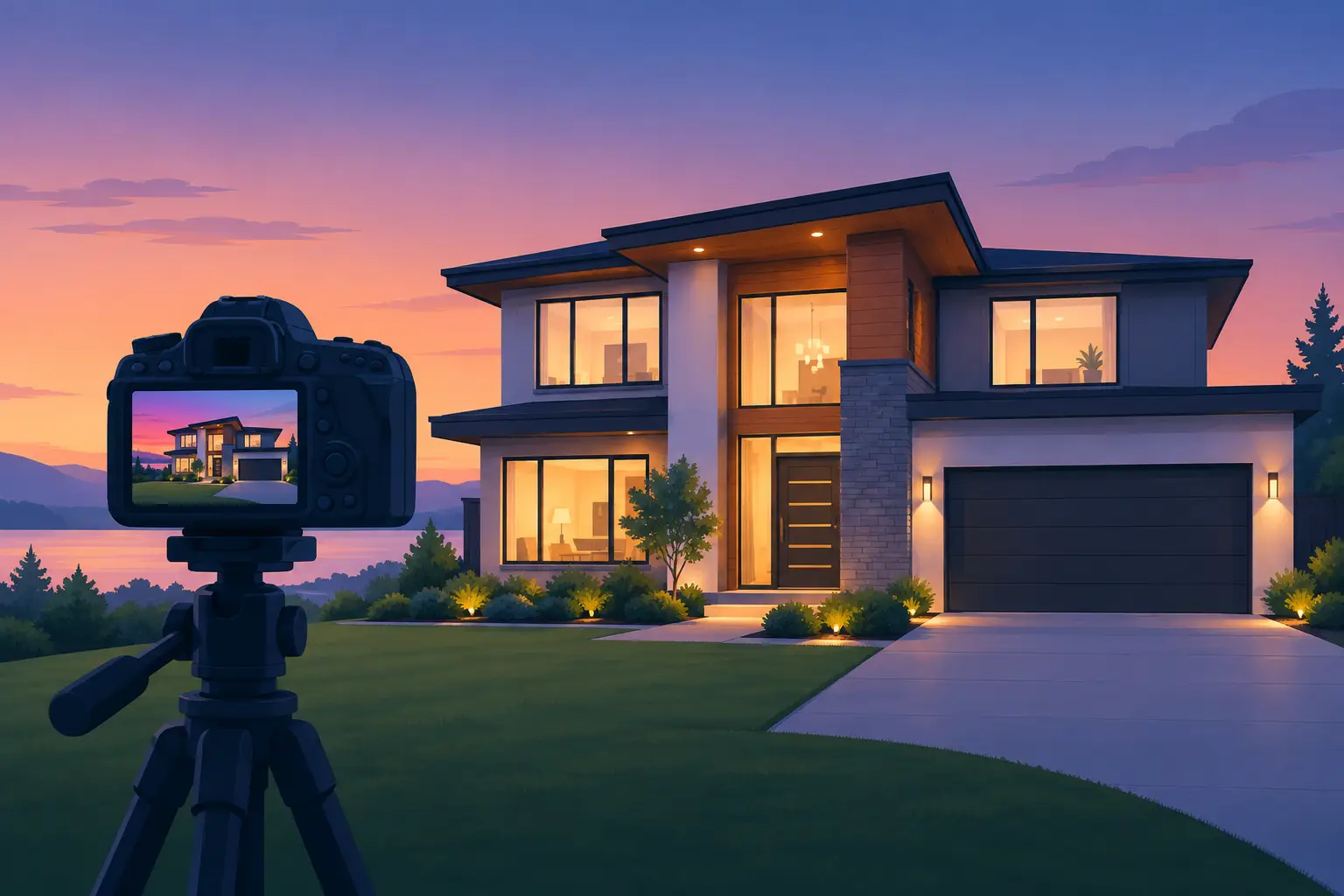
A home can look entirely different in the 20 minutes after sunset. Interior lights begin to glow, windows turn into warm focal points, and exterior details that disappear in midday sun take on shape and depth. That is why twilight photography for real estate can be such a valuable marketing choice for the right listing. It is not just a darker exterior photo. When planned well, it creates an emotional first impression that helps buyers picture the property as a place to come home to.
For realtors across Surrey, Langley, Delta, White Rock, Vancouver, and the Lower Mainland, twilight images are especially effective when a property has strong exterior features, appealing lighting, views, or outdoor living areas. They can elevate a listing presentation, but they are not automatically the right choice for every home. The value comes from choosing the timing and approach that fits the property.
Why Twilight Photography for Real Estate Stands Out
Most listing photos are viewed quickly, often while buyers compare several properties on a phone or laptop. A well-executed twilight image can interrupt that scroll because it has a different visual rhythm than a standard daytime exterior. The sky has color, the house feels illuminated rather than flat, and landscaping, pools, patios, and architectural lines often appear more intentional.
The visual appeal is only part of the equation. Twilight photography can also communicate lifestyle. A fire feature, covered deck, outdoor kitchen, illuminated pathway, or city-facing balcony becomes easier to imagine in use. For homes with a strong entertaining story, a dramatic entry, or a private backyard, that feeling can support the way the listing is positioned.
This does not mean every evening image needs to be highly dramatic. A polished blue-hour image should still represent the property honestly. The goal is to show a home at one of its most inviting moments, not to create a look that buyers will not recognize at a showing.
Which Listings Benefit Most From Twilight Images?
Twilight sessions tend to have the greatest impact when the exterior gives photographers something meaningful to work with. Luxury homes are an obvious fit, but price point alone is not the deciding factor. A thoughtfully maintained family home in South Surrey, a townhome with a rooftop deck in Vancouver, or a Langley acreage with warm landscape lighting may all benefit from an evening shoot.
Properties with these features are often strong candidates:
- Architectural exterior lighting, statement entryways, or large windows
- Pools, hot tubs, patios, decks, pergolas, or outdoor kitchens
- Sunset, water, mountain, city, or open-land views
- Landscaped yards with pathway, garden, or tree lighting
- Contemporary architecture with clean lines and strong indoor-outdoor connections
A simple exterior with limited lighting can still photograph well at twilight, but the return may be lower. In those cases, a bright daytime hero image may tell the listing story more clearly. We recommend evaluating the home itself, the season, the direction it faces, and the intended marketing strategy before scheduling a twilight session.
The Lower Mainland Changes the Planning
Our local conditions make timing particularly important. In summer, twilight arrives late, which can mean a shoot that begins near the end of a long day. In winter, the window comes earlier, but rain, low cloud cover, and wet surfaces can affect the result.
Cloudy weather is not always a reason to cancel. A textured sky can add mood and visual depth, and wet pavement can create attractive reflections when conditions are controlled. On the other hand, heavy rain, high winds, or a completely gray sky may not support the polished result a listing needs. Flexibility is part of professional planning, especially in the Lower Mainland.
What a Professional Twilight Shoot Requires
The best twilight images are carefully prepared before the camera comes out. The usable light changes quickly, often within a short window, so there is little time to solve avoidable issues on site. A successful shoot depends on communication between the realtor, homeowner, and media team.
The property should be fully ready before sunset. Exterior lights need to work and match where possible. Burned-out bulbs, mixed light temperatures, cluttered decks, visible bins, hoses, vehicles, and untrimmed landscaping can draw attention away from the home. Interior rooms visible from outside should also be tidy, because bright windows become a key part of the final composition.
We typically advise homeowners to turn on interior and exterior lighting shortly before the scheduled twilight window. This includes entry lights, landscape lighting, pool lights, hot tub lighting, fireplace features, and lights under covered patios. Blinds and curtains should be adjusted thoughtfully. Open window coverings can create warmth and depth, but they should not reveal cluttered rooms or overly bright spaces.
A professional photographer also needs to balance several competing light sources. The sky is fading while interior lights are warming up, and exterior fixtures can easily become too bright in a photograph. Proper exposure, composition, and detailed editing help retain the blue tones in the sky while keeping the home natural and welcoming.
Timing Matters More Than Most Sellers Expect
Twilight is not a single fixed moment. The look of the sky, the brightness of the windows, and the visibility of landscaping can change from one minute to the next. The ideal capture time depends on the season, weather, the direction the home faces, and whether the property has a view toward the sunset.
For this reason, it is helpful to schedule a twilight shoot with room for preparation rather than treating it as a quick add-on. If daytime photography, video, drone work, and floor plans are also part of the marketing package, the day should be organized so exterior twilight images happen after the home is fully photographed and staged.
Drone photography at twilight can be effective, but it requires added consideration. Visibility, wind, local flight restrictions, and available light all affect what can be captured safely and professionally. Sometimes a daytime aerial image paired with a twilight ground-level hero shot is the stronger combination.
How to Use Twilight Images in Listing Marketing
A twilight photograph earns its place when it is used strategically. In many cases, it works well as the lead image because it immediately establishes a premium, inviting tone. For a property where daylight better shows the lot, landscaping, or façade color, the twilight image may be more effective later in the gallery as an emotional finishing image.
It can also carry across the full marketing package. A strong dusk exterior can be used in social media reels, property websites, feature sheets, video thumbnails, and agent branding materials. Consistent visual direction helps a listing feel considered rather than assembled from unrelated assets.
Still, twilight should complement daytime photography, not replace it. Buyers need clear daytime views to understand the home’s exterior, lot, neighborhood context, and natural light. The strongest listings usually combine practical daytime coverage with a small number of high-impact twilight images.
Common Mistakes That Reduce the Impact
The most common mistake is treating twilight as an editing effect rather than a planned shoot. Artificially darkening a daytime photo may add a colored sky, but it rarely recreates the glow, reflections, and natural light balance of a true dusk image. Buyers can often sense when an image feels overly processed.
Another issue is inconsistent lighting. Cool white bulbs mixed with orange fixtures can make a home look uneven, while excessively bright rooms can appear blown out through windows. Replacing a few mismatched bulbs and checking every exterior fixture beforehand makes a noticeable difference.
Finally, avoid overloading the gallery with near-identical evening shots. One or two carefully composed twilight images usually have more impact than six variations of the same angle. Each image should add something specific, whether it highlights the entry, backyard, view, or outdoor living space.
A Better Way to Plan the Shoot
Twilight photography works best when it is considered early in the listing preparation process. During pre-shoot planning, identify the home’s strongest exterior feature and decide whether the evening image should focus on curb appeal, a backyard retreat, a view, or the connection between interior and exterior spaces.
At KS MAGIK SHOT, we approach twilight coverage as part of the property’s overall visual story, not as a one-size-fits-all upgrade. The right image should support the listing’s positioning, fit the home’s character, and work alongside photography, video, aerial media, and other marketing assets.
When the lights come on and the sky begins to change, the goal is simple: give buyers one more reason to pause, look closer, and imagine themselves at the property.
Leave a Reply