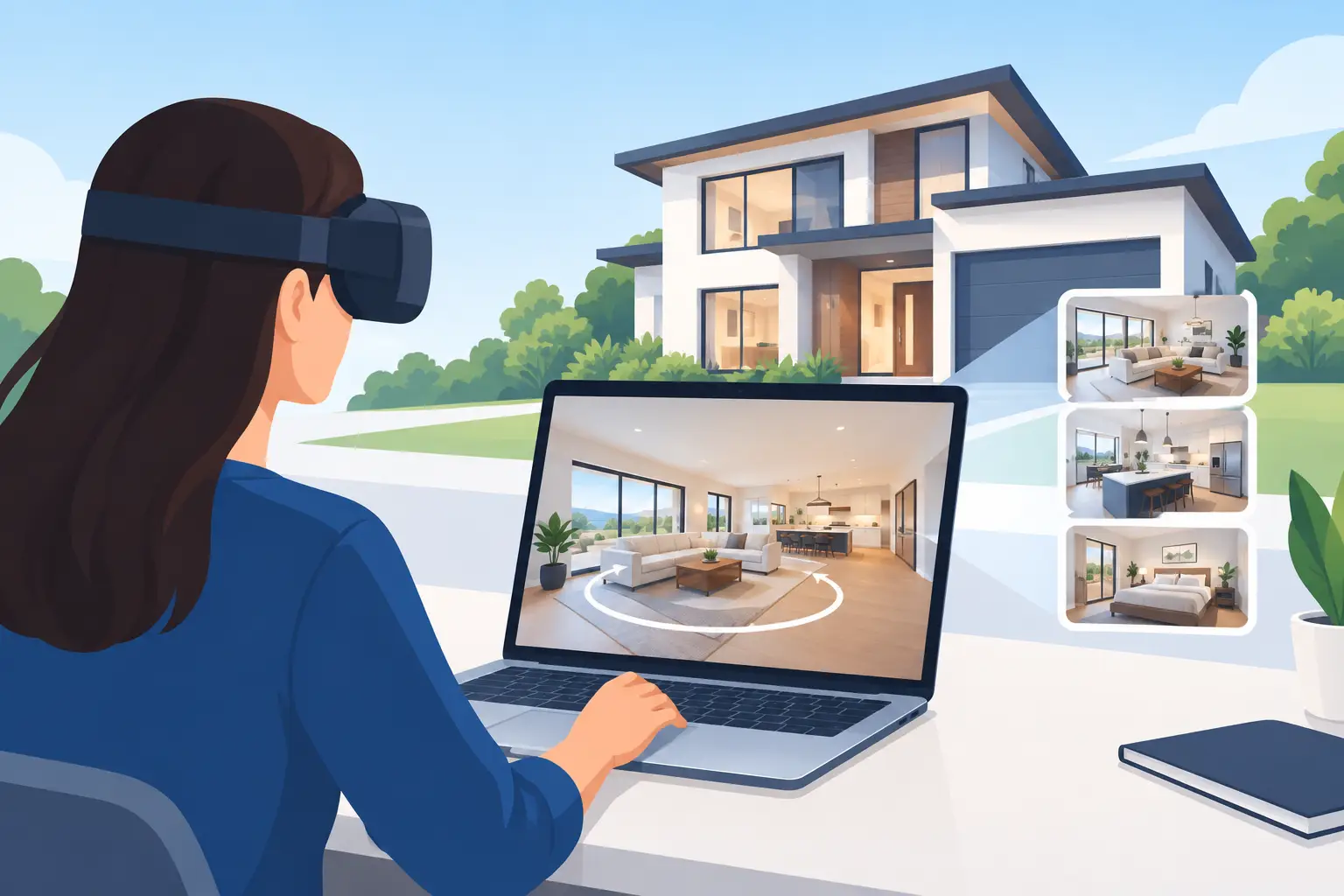
A buyer scrolling through listings at 10:30 p.m. may not be ready to book a showing yet, but they are ready to decide which homes deserve a closer look. Virtual tours give them a way to move through a property on their own time, understand its layout, and form a more realistic impression before they contact an agent.
For realtors and property professionals across Surrey, Langley, Delta, Vancouver, White Rock, and the Lower Mainland, that matters. Listings compete with dozens of similar options, and still photography alone cannot always explain how rooms connect, where the natural light falls, or whether a floor plan feels practical in real life. A well-produced tour adds context without replacing the value of an in-person showing.
Why Virtual Tours Change the Listing Experience
A virtual tour is more than a collection of photos placed in a slideshow. It is an interactive property experience that lets viewers move from room to room, look around at their own pace, and revisit details that caught their attention. Depending on the production, it can include navigable 360-degree views, floor plan integration, information tags, and a polished branded or unbranded presentation.
That control changes how people engage with a listing. A potential buyer can spend time in the kitchen, check sightlines from the living room, or understand whether the primary bedroom is separated from secondary bedrooms. These may seem like small details, but they are often the questions that determine whether someone schedules a showing.
For agents, the benefit is not simply more online activity. The stronger benefit is better-informed interest. When viewers have already explored the home, inquiries and showings can be more purposeful. Buyers may arrive with more specific questions, while out-of-area clients have a clearer understanding of whether a trip to the property is worthwhile.
What Buyers Want to Understand Before a Showing
Buyers do not only evaluate square footage and bedroom counts. They picture daily routines. Can two people move comfortably through the kitchen? Does the dining space connect naturally to the patio? Is the basement accessible from the main living area or through a separate entrance? A photo can show a room beautifully, but it cannot always answer those relationship-based questions.
Virtual tours are particularly effective at communicating flow. This is useful in homes with open-concept layouts, split-level designs, renovated interiors, coach houses, basement suites, and properties where the outdoor spaces are an important part of the lifestyle. In the Lower Mainland, where lot size, suite potential, views, and proximity to amenities can influence a buyer’s decision, presentation needs to provide more than isolated room images.
A tour also helps set accurate expectations. That is valuable even when a property has unusual proportions, compact rooms, or an older layout. Professional real estate media should present a property at its strongest while remaining faithful to what a buyer will experience in person. Overstating space or hiding functional details may generate clicks, but it does not build trust.
When a Virtual Tour Is Worth Adding
Not every listing needs the same media package. The right approach depends on the property, target buyer, price point, timeline, and marketing plan. We recommend considering a virtual tour when it will help viewers understand the home in a meaningful way rather than treating it as an automatic add-on.
Tours often make sense for larger homes, luxury listings, new construction, townhomes with multi-level layouts, and properties likely to attract relocation buyers. They are also useful for homes with thoughtful renovations, distinctive architecture, or outdoor areas that are central to the property story. A buyer considering a waterfront-adjacent White Rock home, a modern Langley build, or a family home in Surrey with a finished suite may benefit from being able to explore the layout before visiting.
They can also support pre-listing and investor marketing. Developers and builders may use tours to document completed work, present model spaces, or help prospects compare units. For tenanted properties, a tour can reduce unnecessary traffic by allowing prospective buyers to preview the space first.
There are trade-offs. A virtual tour requires a property to be prepared carefully because viewers can inspect more of the space than they can in a tightly framed photo. It also works best when it is part of a complete visual strategy. If listing photos are weak, rooms are cluttered, or the home has not been staged with care, the tour will reveal those issues rather than solve them.
Preparation Makes the Difference
The quality of a virtual tour starts well before the camera arrives. Clean surfaces, clear walkways, open blinds where appropriate, and consistent lighting help the property feel calm and easy to navigate. Small visual distractions become more noticeable in an interactive format because viewers choose where to look.
Agents can help homeowners prepare by focusing on three practical areas: personal items, room function, and exterior presentation. Family photos, excess countertop items, pet supplies, and loose cables should be minimized. Each room should have a clear purpose, especially flex spaces that could otherwise confuse buyers. Exterior access points, patios, balconies, and entryways should be ready as well if they are included in the tour.
We also consider the order in which a property is experienced. The virtual route should feel intuitive, beginning with a logical entry point and moving naturally through key living spaces. A confusing sequence can make even a well-designed home harder to understand. Thoughtful capture and editing keep attention on the property rather than on the technology.
Pair Tours With the Media Buyers Actually Use
Virtual tours are powerful, but they should not carry the entire marketing plan. Many buyers first encounter a listing through a thumbnail image, a social post, or a quick search result. Strong HDR photography earns that first click. Cinematic video builds emotion and momentum. Floor plans provide measurements and planning context. A tour then gives serious viewers the freedom to examine the home more closely.
Each format answers a different question. Photos ask, “What does this property look like?” Video asks, “What would it feel like to be here?” Floor plans ask, “How is it organized?” Virtual tours answer, “Can I move through it myself?” When these pieces are aligned, the listing feels more complete and more credible.
This is also why consistency matters. The styling, lighting, and visual standard should remain cohesive across the full package. A polished property video followed by a poorly lit or confusing tour creates friction. A customized approach ensures the media supports the listing’s actual strengths, whether that is an entertainer’s kitchen, a bright corner unit, a private backyard, or a practical family layout.
Use the Tour Beyond the MLS
Once the tour is ready, it can support more than the primary listing page. Agents can include it in buyer follow-ups, feature it in email marketing, share a preview through social media, and use it during remote consultations. For team members who are coordinating showings or speaking with out-of-town clients, it becomes a useful reference point that remains available after the initial launch.
The presentation should match the intended use. An unbranded version may be appropriate for certain listing platforms, while a branded experience can support direct marketing and agent follow-up. The details depend on brokerage practices and platform rules, so planning the deliverables before production helps avoid last-minute compromises.
At KS MAGIK SHOT, we approach virtual tours as one part of a property-specific media plan. The goal is to make the home easier to understand, easier to remember, and easier for the right buyer to take seriously.
A buyer may still need to walk through the front door before making an offer. But when they arrive already familiar with the flow, features, and feel of the property, the showing can become a more meaningful next step rather than their first attempt to understand the home.
Leave a Reply